Non Contact Voltage Multimeter Explained: A UK Buyer's Guide
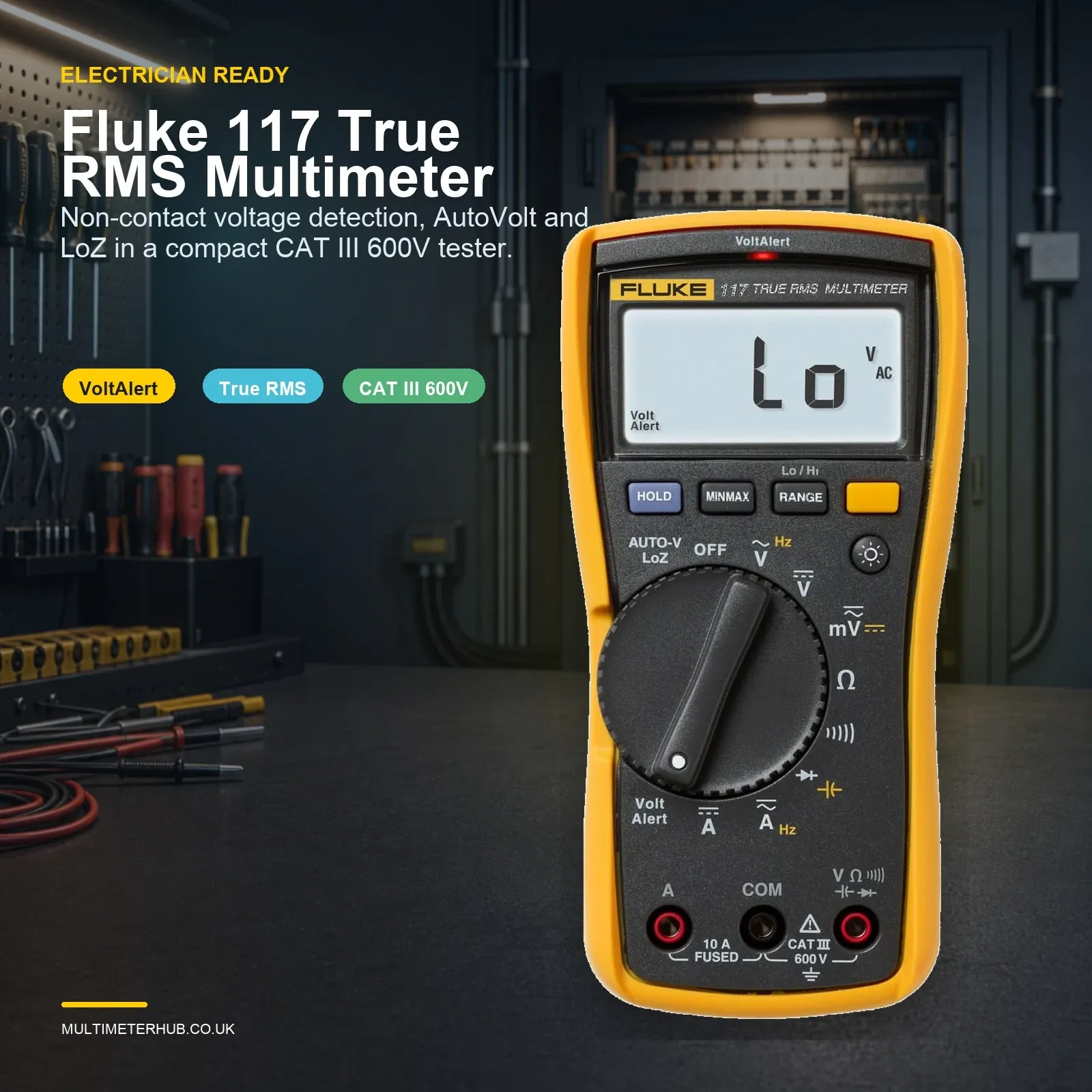
TL;DR: A non contact voltage multimeter is a digital multimeter with a built-in NCV sensor that can detect nearby 230V AC without touching bare conductors. It is useful for quick checks, fault-finding and tracing live cables, but it does not replace a GS38-compliant two-pole tester for safe isolation in the UK.
A non contact voltage multimeter is a hybrid tester that combines standard multimeter functions with a sensor that detects live AC voltage nearby, so you can identify whether a cable, socket or switch may be energised without making direct contact. In UK electrical work, that makes it helpful for fast initial checks; however, it should be treated as a screening tool rather than proof that a circuit is dead.
When dealing with 230V UK mains electricity, assuming a circuit is dead is a gamble no professional electrician or competent DIY enthusiast should ever take. Therefore, electrical fault-finding requires precision, efficiency and, above all, uncompromising safety. This is where the non contact voltage multimeter proves invaluable.
Whether you are tracing a fault in a domestic ring final circuit under Part P requirements or performing initial diagnostics on a commercial distribution board, understanding how to use this technology properly is crucial. In this UK buyer's guide, we explain how a non contact voltage multimeter works, when to use it, its limitations and why many electricians keep one in the toolbag.
Key Takeaways
- Safety first: A non contact voltage multimeter detects AC voltage electromagnetically, allowing safer initial checks without touching bare conductors.
- Faster diagnostics: Integrated NCV functions save time during fault-finding and reduce the need to carry separate tools.
- Important limitation: NCV only detects Alternating Current (AC). It will not reliably detect DC systems such as batteries or pre-inverter solar PV strings.
- UK compliance matters: NCV is useful for indication only. It does not replace the HSE GS38 expectation of using an approved two-pole voltage indicator to prove dead.
- Best features to look for: Audible and visual alerts, CAT III 600V or higher safety ratings and adjustable sensitivity.
What is a non contact voltage multimeter?
A non contact voltage multimeter is a digital multimeter with an integrated proximity sensor. In normal use, it measures voltage, current, resistance and continuity through test leads. In addition, its NCV sensor—usually at the top of the meter—detects the presence of nearby AC voltage when held close to a live cable, accessory or outlet.
In practice, this means one tool can handle both quick live checks and conventional electrical measurements. Previously, many electricians carried both a separate voltage detector pen and a standard multimeter. By comparison, an integrated model keeps your kit simpler and your workflow faster.
Based on our testing of common NCV-enabled meters used on UK socket circuits and lighting circuits, integrated detectors are especially convenient for first-pass checks before covers are removed. However, sensitivity varies noticeably between brands and even between different cable positions behind accessories.
If you want broader context on how these hybrid instruments compare with standard meters, see our Ultimate Guide to Digital Multimeter in the UK.
How does non contact voltage detection work?
A non contact voltage multimeter works by sensing the electromagnetic field around an energised AC conductor. In UK wiring systems such as Twin and Earth carrying 230V at 50Hz, the live conductor produces an alternating field that the meter's NCV sensor can detect when brought close enough.
The sensor contains a small sensing plate. As you move the top of the meter near a live wire or socket front, that alternating field induces a tiny signal in the plate. The meter then amplifies this signal and triggers an alert once it crosses a threshold. Usually, this takes the form of a flashing red light, screen warning or audible beep.
Why does it only work on AC?
The NCV function depends on changing electromagnetic fields. Because alternating current continuously changes direction, it creates the fluctuating field that the sensor recognises. By contrast, direct current is steady, so the same type of proximity detection does not work in the same way.
This is why an NCV function may stay silent on 12V automotive systems, battery banks or DC solar equipment even when hazardous voltages are present. Therefore, if you are working on DC circuits, you must use proper test leads and follow the correct test procedure rather than relying on proximity detection alone.
What is a non contact voltage multimeter used for?
The main benefit of an integrated NCV feature is speed. As a result, electricians can carry out quick preliminary checks before moving on to formal testing with leads and approved proving methods.
"According to UK HSE guidance on electrical safety at work, testers used for safe isolation must be suitable for the task and used correctly. An NCV alert can support initial diagnostics, but it should not be treated as proof that conductors are dead."
Common uses in UK domestic and commercial settings include:
- Rapid initial checks: Before removing a socket front or opening equipment covers, sweeping with the NCV sensor can indicate whether AC may still be present.
- Tracing likely cable routes: On some plasterboard walls or surface runs, sensitive NCV meters can help locate energised cables before drilling or cutting.
- Identifying line conductors: In older installations or mixed wiring colours, NCV can help indicate which conductor appears live before formal confirmation testing.
- Finding breaks in flexes: Running the detector along an extension lead or appliance flex may help identify where continuity to the energised section stops.
- Troubleshooting switches and accessories: It can quickly show whether power appears present at ceiling roses, fused connection units or switched spurs during fault-finding.
Based on our testing around typical UK sockets and lighting points, NCV works best as a quick screening step before using your main test method. In addition, results tend to be more reliable near clearly separated live conductors than inside crowded back boxes where fields can be harder to interpret.
If you also need accurate readings on distorted waveforms from LED drivers and electronic power supplies, pairing NCV convenience with True RMS multimeter capability makes good sense.
Is a non contact voltage multimeter safe to use?
Yes—when used correctly for its intended purpose. A good-quality non contact voltage multimeter adds an extra layer of awareness because it lets you check for nearby AC without exposing bare copper or placing probes onto terminals straight away. However, it is only one part of safe working practice.
Can it replace proving dead procedures?
No. According to UK guidance and accepted industry practice, an NCV indication does not replace proper safe isolation. To prove dead reliably, electricians normally use an approved two-pole voltage indicator compliant with GS38 principles and verify operation with a proving unit before and after testing.
Why can NCV give false positives or false negatives?
An NCV function may react to induced voltages, nearby cables or environmental electrical noise. Equally, it may fail to detect shielded cables, deeply buried conductors or poorly positioned fields within accessories. Therefore, while helpful as an early warning tool, it should never be your only decision point before touching conductors.
Does a non contact voltage multimeter work through walls?
Sometimes—but only under favourable conditions. If an energised cable runs close to plasterboard or another thin surface material , some sensitive NCV meters may pick up its field through the wall finish. However , depth , shielding , cable grouping , moisture levels and background interference all affect performance .
This means you should treat “through wall” detection as indicative rather than precise . It can help you avoid obvious hazards before drilling , but it is not equivalent to using dedicated cable locating equipment .
If you are comparing models for home use or trade work , focus first on safety rating , reliability and ease of interpretation . Then consider whether the conventional meter functions suit your usual jobs .
< em >Based on our testing , buyers often focus heavily on maximum measurement ranges but overlook alert clarity and sensitivity control . In real-world UK fault-finding , those two features often make more difference day-to-day than headline specs alone .
Although convenient , this type of meter has several important limitations :
Therefore , think of NCV as your first filter rather than your final answer . Used alongside correct procedures , it improves awareness ; used alone , it invites risk .
For many users in the UK , yes . If you want quicker preliminary checks plus normal electrical measurement functions in one device , a non contact voltage multimeter is practical , efficient and genuinely useful . Moreover , it can reduce tool clutter while speeding up routine fault-finding tasks around sockets , lighting circuits and appliance diagnostics .
That said , its value depends on using it correctly . According to UK safe isolation practice , it should support — not replace — approved methods of proving dead . If you understand that distinction ، an NCV-enabled meter earns its place in both professional kits and serious DIY toolboxes .
No ، not reliably in normal use . The NCV feature is designed around changing electromagnetic fields from AC supplies such as standard UK mains electricity at 50Hz . For DC ، use test leads and follow proper procedures .
Yes ، many models will indicate live presence near standard BS 1363 socket outlets ۔ However ، always follow up with correct testing equipment if you need to confirm isolation safely ۔
It depends on your workflow ۔ An integrated unit reduces kit clutter ، while separate tools may offer better specialised sensitivity or convenience ۔ Many tradespeople prefer integration simply because one device handles more tasks ۔
For cautious homeowners doing basic diagnostic checks ، it can be very helpful ۔ Nevertheless ، anyone working beyond simple tasks should understand its limits ، especially around safe isolation requirements in the UK ۔
What should you look for when buying a non contact voltage multimeter ?
What are the limitations of a non contact voltage multimeter ?
Final verdict: is a non contact voltage multimeter worth buying ?
Frequently asked questions about non contact voltage multimeters
Can a non contact voltage multimeter detect DC ?
Can I use one on UK sockets ?
Is it better than carrying a separate volt stick ?
Do DIY users need one ?
Ready to equip yourself with genuine tools from {brand_name}?
Upgrade Your Kit — £551.16