Autovolt Multimeter Explained: A UK Buyer's Guide
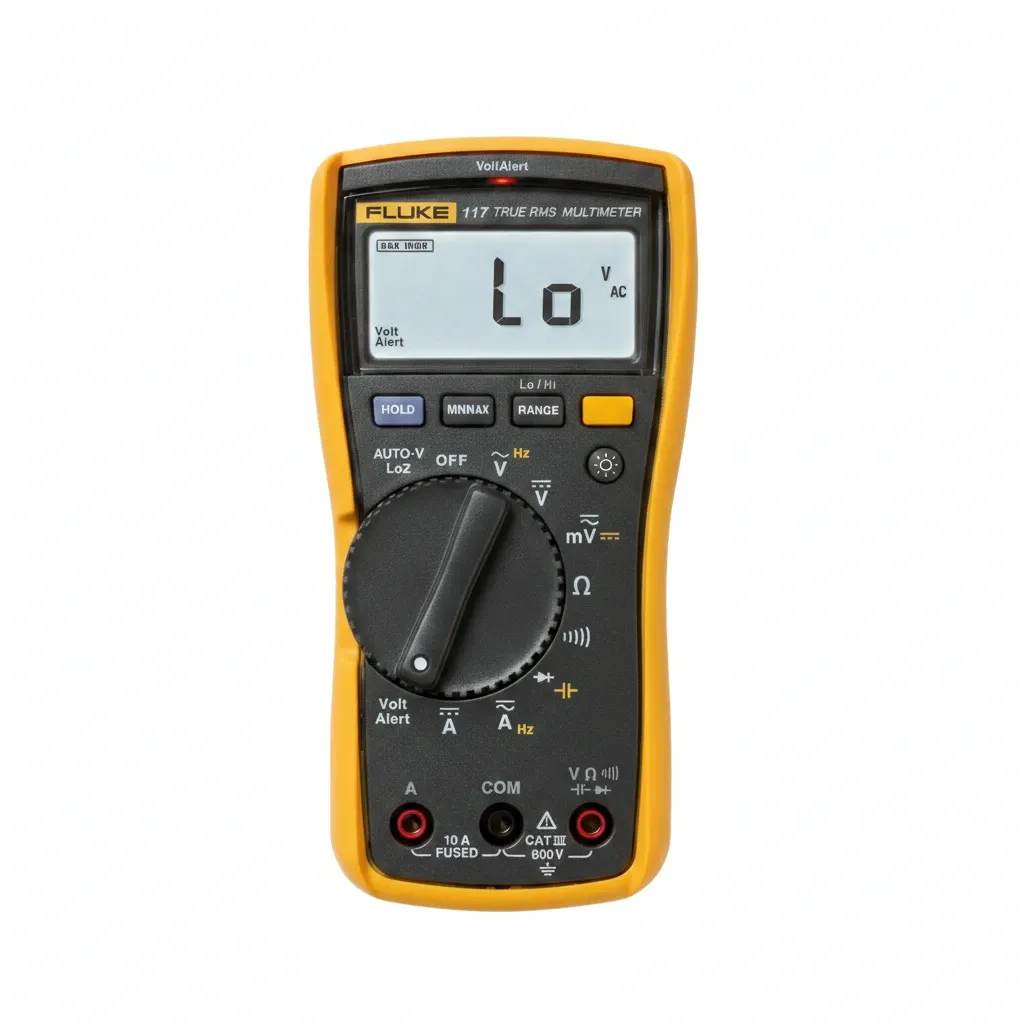
Diagnosing electrical faults across UK mains circuits demands rigorous precision and uncompromising safety. Staring at a complex consumer unit or navigating a dense commercial wiring tray leaves no room for guesswork. Selecting the wrong voltage setting on a traditional manual-ranging device can lead to blown internal fuses or compromise your physical safety. Enter the AutoVolt multimeter. This sophisticated diagnostic tool automatically determines whether a circuit is carrying alternating current (AC) or direct current (DC) and selects the correct measurement range instantly.
Key Takeaways
- AutoVolt technology automatically detects AC or DC voltage, eliminating the need for manual dial adjustments during fault-finding.
- Integrated low-impedance (LoZ) modes actively dissipate ghost voltages common in long parallel cable runs across commercial UK properties.
- These meters streamline diagnostics for electricians navigating complex 230V domestic and 400V three-phase industrial systems.
- Combining AutoVolt functionality with True RMS capabilities ensures accurate readings on highly distorted electrical waveforms.
Decoding the AutoVolt Multimeter
At its core, an AutoVolt multimeter simplifies the diagnostic process by removing a critical layer of manual input. Unlike standard auto-ranging meters—which still require you to physically select between AC and DC modes via a rotary dial—an AutoVolt device makes that fundamental decision for you. You simply turn the selector to the dedicated AutoVolt setting, place your test probes securely across the circuit, and allow the internal microprocessor to analyse the incoming electrical signal.
The internal circuitry relies on a high-speed analog-to-digital converter (ADC). If the device detects an alternating waveform crossing the zero-voltage threshold at a regular frequency, it identifies the signal as AC and displays the root mean square value. If a steady potential difference is present without those zero-crossings, it locks into DC mode. This capability is transformative for professionals who regularly switch between testing standard 230V mains circuits and lower voltage DC control panels. You spend less time adjusting your instrument and more time identifying the actual fault.
For a comprehensive overview of how these automated devices fit into your wider diagnostic toolkit, explore our foundational guide: The Ultimate Guide to Digital Multimeter in the UK.
The Mechanics of Auto-Voltage Detection and Ghost Voltages
One of the most significant advantages of a premium AutoVolt multimeter is its inherent low input impedance, universally labelled across the industry as LoZ. High-quality traditional multimeters possess a very high input impedance, typically hovering around 10 megohms. This high electrical resistance is entirely deliberate. It prevents the meter from drawing excessive current and altering the circuit's behaviour during sensitive electronic component testing.
This high impedance creates a dangerous illusion in standard electrical installation work. When unenergised wires run parallel to live conductors over long distances—a standard scenario in large-scale UK installations like hospital wards, office blocks, or industrial units—capacitive coupling occurs. The parallel wires, separated by their PVC insulation and the air inside the trunking, effectively act as a giant capacitor. The live wire induces a small, harmless voltage in the adjacent dead wire.
A high-impedance meter will register this "ghost voltage," sometimes displaying upwards of 80V to 100V. This false reading can cause immense confusion, leading electricians to believe a safely isolated circuit remains live.
An AutoVolt multimeter operating in its primary LoZ mode presents a significantly lower internal resistance (usually around 3 kilohms) to the circuit under test. This slight load is enough to bleed off the induced capacitive voltage harmlessly. If the wire is genuinely dead, the display will instantly drop to zero. If the wire is genuinely live, the mains power supply will easily sustain the voltage across the lower impedance, and the meter will display the true 230V reading.
Why UK Electricians Rely on AutoVolt Technology
Navigating the stringent requirements of BS 7671 (the IET Wiring Regulations) requires rigorous testing and verification procedures. While safe isolation must always be proven with a dedicated two-pole voltage indicator and an approved proving unit, an AutoVolt multimeter rapidly becomes the primary weapon for the subsequent fault-finding phase.
Consider the complex maintenance routines required within sprawling NHS trust estates. These demanding environments mix older legacy wiring infrastructure with modern medical equipment and intricate building management systems (BMS). A maintenance technician might move from testing a standard ring final circuit in a ward to troubleshooting a 24V DC HVAC control loop in the plant room within the same hour. The automatic AC/DC selection removes a persistent point of friction, allowing the technician to maintain focus on the live environment rather than the tool.
Data from the Health and Safety Executive (HSE) highlights that roughly 1,000 electrical accidents at work are reported each year in the UK. Utilising intuitive, error-reducing equipment plays a vital role in executing safe isolation and diagnostic procedures.
By limiting the need to physically interact with the meter's dials while working within live distribution boards, you significantly reduce the risk of accidental contact with exposed conductive parts. The tool works with you, anticipating the measurement rather than waiting for manual instruction.
Core Features to Maximise Diagnostic Efficiency
An AutoVolt setting rarely exists in isolation. Leading measurement equipment manufacturers integrate this technology alongside other critical diagnostic features to create robust, multi-functional units. When upgrading your test equipment, evaluate the device based on the following technological synergies.
True RMS Accuracy on Distorted Mains
Modern UK power grids and internal building networks are heavily polluted with electrical harmonics. LED lighting drivers, variable frequency drives (VFDs) in commercial pump systems, and the widespread proliferation of solar PV inverters all severely distort the standard 50Hz sine wave. A basic average-responding multimeter will provide highly inaccurate readings on these distorted waveforms, sometimes reading significantly lower than the actual thermal value of the voltage.
To ensure absolute precision, your AutoVolt device must include True Root Mean Square (True RMS) calculation. This mathematical capability ensures that regardless of how distorted the alternating current waveform becomes, the voltage reading remains accurate. We cover the underlying physics of this extensively in our dedicated piece: True Rms Multimeter Explained: A UK Buyer's Guide.
Integrated Non-Contact Voltage Detection
Before you unpack your test leads and expose the metal probes, a built-in non-contact voltage (NCV) detector allows you to rapidly scan for the presence of AC voltage in cables, socket outlets, and junction boxes. While it never replaces formal safe isolation procedures, it offers an immediate first-pass check for live conductors.
Combining an NCV sensor with an AutoVolt setting means you can quickly identify a live cable through its outer sheath, then immediately deploy your probes to measure the exact voltage value without touching a single dial on the meter interface. For a deeper dive into this specific safety feature, read our guide: Non Contact Voltage Multimeter Explained: A UK Buyer's Guide.
Safety Categories and Robust Build Quality
Any multimeter used on UK mains electricity must carry the appropriate measurement category rating. For work at the consumer unit or main distribution board, a CAT IV 300V or CAT III 600V rating is the absolute minimum legal and safety requirement. This robust rating ensures the internal circuitry can withstand massive transient overvoltages (spikes) that can travel down the grid from lightning strikes or major substation switching events.
AutoVolt vs. Manual Ranging: Making the Right Choice
The debate between manual and automatic test equipment often centres on the balance between absolute user control and diagnostic convenience. Some seasoned electrical engineers prefer manual ranging meters, arguing the tool forces the user to actively calculate the expected values before applying the probes. This deliberate, methodical approach has significant merits in controlled laboratory environments or during complex printed circuit board (PCB) component-level repairs.
For the domestic installer or commercial electrician focused on rapid fault-finding and installation verification, time dictates profitability. The AutoVolt multimeter bridges this gap effectively. It provides the necessary automation to speed up routine voltage checks while incorporating the critical LoZ safeguard to prevent misdiagnosis. You still require a fundamental understanding of the circuit you are measuring, but the tool strips away the mechanical repetition of rotary dial adjustments.
To master the broader application of these tools across different electrical scenarios, returning to our core resource, The Ultimate Guide to Digital Multimeter in the UK, provides excellent foundational knowledge for both apprentices and veteran sparks.
Real-World Applications for UK Professionals
Let us examine how this specific technology performs across various demanding sectors of the British electrical industry.
Domestic Upgrades and EICRs
During an Electrical Installation Condition Report (EICR), an inspector tests dozens of individual circuits. When encountering mixed installations—perhaps a modern kitchen extension wired into an older, poorly documented split-load consumer unit—an AutoVolt multimeter proves invaluable. It allows rapid voltage verification across different protective devices without pausing to reset the meter. The LoZ function is particularly useful when checking for phantom voltages on complex two-way lighting circuits where switch lines run parallel through ceiling voids for long distances.
Industrial Motor Control and Automation
Industrial environments utilise heavy machinery operating on robust 400V three-phase supplies, which are frequently controlled by lower voltage DC contactors and PLCs (Programmable Logic Controllers). A technician troubleshooting a sudden motor failure needs to verify the presence of the three-phase supply, then immediately check the 24V DC control signal originating from the safety relay. The AutoVolt function handles this exact transition seamlessly. This allows the technician to keep their eyes firmly on the sharp probes and the live terminals rather than looking down to adjust a rotary switch in a dimly lit plant room.
Frequently Asked Questions (FAQ)
Does an AutoVolt multimeter replace a dedicated voltage indicator for safe isolation?
No. Under UK Health and Safety guidelines and standard industry practice, safe isolation must be proven using an approved two-pole voltage indicator (AVI) and a proving unit. A multimeter is classed as a measurement device, not an isolation verification tool. It is deployed for fault-finding after safe isolation has been confirmed or when live testing is strictly necessary and fully justified by a risk assessment.
Will the LoZ mode trip an RCD during testing?
When measuring voltage between the phase conductor and earth, the low impedance (LoZ) mode allows a small amount of current to flow through the meter to earth to dissipate ghost voltages. On certain highly sensitive meters, this leakage current might be sufficient to trip a 30mA Residual Current Device (RCD) or RCBO. You must be mindful of your specific test points when using the LoZ function on RCD-protected circuits.
How does the meter differentiate between AC and DC so quickly?
The internal analog-to-digital converter constantly samples the incoming electrical signal. If the signal crosses the zero-volt line at a regular frequency (such as the 50Hz standard of the UK National Grid), the microprocessor identifies it as AC. If the signal remains steady without those zero-crossings, it locks onto the DC measurement algorithm.
Can I use the AutoVolt setting to measure current or resistance?
No. The AutoVolt setting is exclusively designed for measuring voltage (potential difference). To measure current (Amps) or resistance (Ohms), you must manually select the appropriate function on the multimeter dial and, in the case of current, physically move your test leads to the dedicated amperage jacks on the device.
Upgrade Your Diagnostic Toolkit
Equip yourself with a premium digital multimeter designed for fast fault-finding, featuring integrated non-contact voltage detection and True RMS accuracy. The Ultimate Electrician Multimeter for Safe Diagnostics doesn't just measure voltage; it anticipates your workflow, protects you from misleading readings, and ensures compliance with rigorous safety standards.
Stop wasting billable hours fighting ghost voltages or fumbling with manual dials in poorly lit distribution panels. Invest in diagnostic equipment that matches your professional standards and protects your livelihood. Explore our carefully curated selection of professional-grade tools at Multimeter Hub and secure the exact AutoVolt multimeter that aligns with your daily diagnostic demands.
Ready to equip yourself with genuine tools from {brand_name}?
Upgrade Your Kit — £551.16